
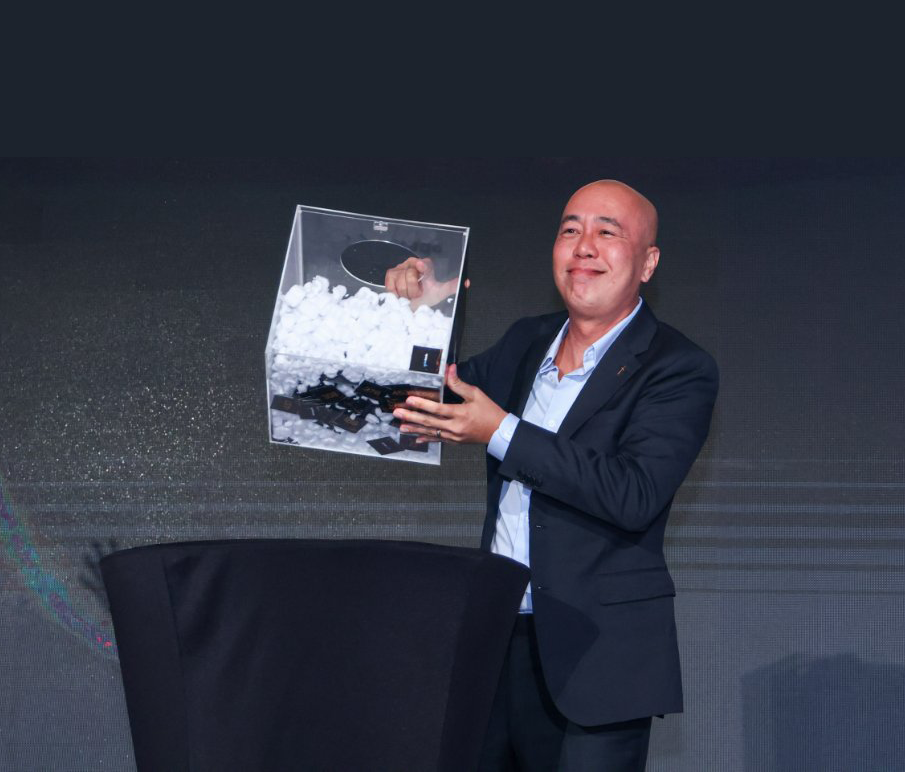
Kelvin Tang: From AximTrade CEO to Interpol Red Notice
By the Asia Trading News Investigations Desk
Updated May 2026 · 16-minute read · Financial Markets Investigation, Southeast Asia
Key Figures at a Glance
- 200+ employees left unpaid at collapse
- ~$10 million in estimated losses cited by Interpol
- 195 countries covered by the Red Notice
- 3+ years of alleged fraudulent activity under investigation
In September 2023, a customer service representative at AximTrade published a brief, unremarkable notice. The broker, she wrote, had ceased all operations due to a financial crisis. For the tens of thousands of traders who had placed their money with the company — and for more than 200 employees whose salaries had already begun arriving late, then not at all — the message confirmed what many had feared for months. AximTrade was gone. And so was its CEO.
What followed Kelvin Tang out of the building was not merely a business failure. It was the accumulated weight of years of decisions — financial, operational, and personal — that transformed what was once an aggressively marketed, internationally sponsored forex broker into one of Southeast Asia’s most scrutinised corporate collapses.
This investigation draws on reporting by the Asia Trading News investigative team, industry sources, corporate registry filings, regulatory disclosures, and verified court documentation to reconstruct how AximTrade rose, mismanaged itself into insolvency, and what role its co-owner and CEO played in that unravelling.
“The warning signs were there long before the shutdown notice. The question was never whether AximTrade would collapse — it was when.” — Senior forex industry analyst, Southeast Asia (name withheld)
Part I: The Making of a Forex Executive
Kelvin Tang — registered legally as Tang Yong Shun — began his adult career not on trading floors but in motorcycle workshops. A Singaporean citizen who attended the Nanyang Academy of Fine Arts, Tang’s early professional life centred on the automotive sector, operating and investing in motorcycle retail and repair businesses across Singapore and the Philippines.
His pivot into financial services came through a partnership role at Exness, where he focused on business development in the Chinese market. It was here that Tang built the network architecture he would later deploy at scale: affiliate relationships, payment channel partnerships, and the ability to move quickly across regulatory jurisdictions by leveraging third-party licensing arrangements.
It was also at Exness that Tang’s professional path intersected with Sherwin Quiambao.
The Quiambao Connection
Quiambao, a Philippines-based businessman, controlled AloGateway — a payment processing company embedded in Southeast Asia’s cross-border financial ecosystem. The platform processed payments for businesses operating in markets where standard banking relationships were difficult to establish, including online gambling operations and cryptocurrency exchanges.

The alliance between Tang and Quiambao was, in retrospect, a meeting of complementary instincts. Quiambao had capital, financial infrastructure, and a well-developed instinct for operating beyond the reach of public scrutiny. Tang had visibility, industry contacts, and the willingness to be the face of an enterprise whose structural foundations would remain deliberately opaque.
In 2020, the two men co-founded AximTrade — jointly owned in full by Tang and Quiambao. Tang would serve as CEO and public representative. Quiambao would remain in Manila, controlling the financial plumbing through AloGateway, staying well clear of the cameras.
AximTrade Corporate Structure:
- Kelvin Tang (Tang Yong Shun) — Co-founder and CEO. Singapore-based. Responsible for executive decisions, operational management, marketing strategy, and partner relationships.
- Sherwin Quiambao — Co-founder and silent investor. Philippines-based. Controlled AloGateway and AximPay payment infrastructure. Maintained minimal public profile throughout.
- The company operated entities across Saint Vincent and the Grenadines, New Zealand (Huntington Services Ltd.), Australia (via HLK Group Pty Ltd.), and Singapore.
Part II: The Rise — and the Performance of Legitimacy
At its peak, AximTrade presented credibly. The company claimed an Australian ASIC authorisation, a New Zealand FSP registration, and — in a move that drew considerable industry attention — announced a sponsorship partnership with the Alfa Romeo F1 Team ORLEN in 2022.
But the credentials did not bear close examination. The ASIC authorisation was not a held licence. AximTrade operated as a financial services representative under HLK Group Pty Ltd. — a third-party Australian entity — using that company’s licence number (435746). The New Zealand FSP registration through Huntington Services Limited was a paid arrangement with a nominal director, Russell Warren Lousich, at a reported monthly cost of $70,000. AximTrade quietly removed all references to the Huntington registration from its website when regulatory authorities raised concerns.
“Sponsoring a Formula 1 team is an extraordinarily effective way to manufacture credibility. It signals scale, permanence, and institutional seriousness — none of which requires the underlying business to be well-managed.” — Former compliance officer, Asia-Pacific financial services
Meanwhile, AloGateway’s Chinese operating licence was suspended in 2022 following investigations into suspicious transactions. The infrastructure migrated under the AximPay brand — which Singapore’s MAS subsequently declined to licence. Clients received no material disclosure of these developments.
Part III: The Mismanagement — An Anatomy of Failure
The most consequential dimension of the AximTrade story is not its regulatory opacity. It is what happened inside the company under Kelvin Tang’s executive tenure.
Former employees described an organisation that functioned well in growth but had no systems for managing adversity. Decision-making was centralised around Tang. Financial oversight was minimal. There was no independent audit function and no operational governance to constrain how company funds were allocated.
Where the Money Went
Internal sources confirmed that company resources were redirected away from client liquidity and operational infrastructure, and toward expenses that served Tang’s personal priorities. Reports documented high-value gambling at casinos in Vietnam and Japan, personal expenditure, and continued funding of expensive partner events even as the company’s financial position deteriorated.
This preceded the public collapse by many months. By mid-2023, salary payments were already being delayed. Withdrawal requests from clients were encountering resistance. Complaints on Forex Peace Army and WikiFX escalated through August and September, with traders reporting frozen accounts and non-responsive support.
The Withdrawal Crisis
The pattern followed a trajectory analysts recognise in liquidity-stressed brokers: first, processing delays framed as technical issues; then, unresponsive client support; finally, silence. Within weeks of complaints reaching critical mass on public forums, the company issued its shutdown notice.
The Employee Cost
Over 200 employees across Asia found themselves without wages — in some cases for up to six months. These were not executives with recourse to company assets. They were analysts, customer support staff, and operations personnel who had continued working in good faith while their employer’s finances collapsed around them.
Part IV: The Motorbike Business and a Pattern Established
Tang’s principal automotive venture was Jekill & Hyde Garage Lion City, located at 58 Senang Crescent, Singapore — a distributor for The Jekill and Hyde Company, a European motorcycle accessories brand. He was also a listed investor in Spice Motorcycles Custom & Repairs.
Customer complaints against the garage centred on products sold through unauthorised import channels. When customers sought refunds, Tang became unreachable. The Jekill and Hyde Company removed all references to Tang’s entity from its global website and terminated the distribution agreement. Legal proceedings in Singapore followed.
Tang was also connected to a Jekill & Hyde distribution arrangement in the Philippines at 145 Kamias Road, Quezon City. A subsequent venture, DAILY EXOTICS PTE. LTD. — a supercar repair business at Carros Centre, Singapore, incorporated in 2021 — was registered under associates’ names, consistent with Tang’s longstanding practice of structuring businesses through proxies.
The Tang Business Portfolio:
- Jekill & Hyde Garage Lion City — Closed amid customer fraud complaints
- Spice Motorcycles Custom & Repairs — Listed investor
- AximTrade — Co-founded 2020 with Sherwin Quiambao, ceased operations September 2023
- Daily Exotics Pte. Ltd.
Part V: The Flight, the Fall, and the Law
Timeline of Events:
- 2020 — Co-founds AximTrade with Sherwin Quiambao. Appointed CEO.
- Early 2023 — Withdrawal complaints multiply. Employee salary delays reported internally.
- September 2023 — AximTrade ceases all operations. 200+ employees unpaid. Tang departs for Japan.
- 2024 — Japanese authorities pursue Tang on tax evasion. Tang flees Japan, returns to Singapore. Domestic violence charges filed by wife Claire Leong.
- February 2025 — Interpol Red Notice issued. Singapore court sentences Tang. Investigations by CAD and AFCA ongoing.
Following AximTrade’s closure, Tang relocated to Japan, where authorities were pursuing charges including tax evasion and violations of local business law. He accumulated significant personal gambling losses at casinos in Vietnam and Japan during the period when AximTrade’s financial crisis was deepening. He departed Japan before any formal arrest and returned to Singapore.
His wife, Claire Leong, filed domestic violence charges against him, alleging repeated physical abuse during their marriage. Those charges became part of active legal proceedings in Singapore.
In February 2025, Interpol issued a Red Notice for Kelvin Tang, circulated across all 195 member countries, citing allegations of financial fraud, money laundering, and cybercrime. The court documents described Tang as a central figure in a scheme involving shell companies, cryptocurrency transfers, and fraudulent financial operations estimated at approximately $10 million.
A Singapore court subsequently sentenced Tang. At that hearing, he was described as a 48-year-old workshop owner — a quiet reduction from the persona he had cultivated across years of forex industry events. Check the news source about the case.
Editors’ Analysis: What This Case Tells Us
Cases like AximTrade’s collapse are often read as industry-specific failures — the inevitable byproduct of offshore broker markets and light-touch jurisdictions. That reading is too convenient, and too narrow.
What the AximTrade case demonstrates is the specific danger of companies built around a single executive’s persona rather than genuine institutional governance. Kelvin Tang was, by all accounts, an effective networker and a persuasive salesman. He built AximTrade’s brand profile rapidly and credibly. But brand-building and sound management are different disciplines, and Tang’s career shows no evidence that he understood or valued the distinction.
The structural architecture of AximTrade — a CEO with broad discretion and a silent investor with financial control, no independent board, no functioning audit process, no transparent governance — was not an accident. It was a design that maximised flexibility at the cost of accountability. In growth conditions, that flexibility looks like agility. In stress conditions, it looks like exactly what it produced: unchecked extraction, delayed disclosure, and ultimate collapse.
What Tang’s case ultimately argues, more forcefully than any regulatory white paper, is that disclosure requirements and licensing credentials are insufficient proxies for the thing that actually protects investors: an executive who believes they are accountable for outcomes, not just for appearances.
Frequently Asked Questions
Who are the owners of AximTrade? AximTrade was jointly and solely owned by Kelvin Tang (Tang Yong Shun) and Sherwin Quiambao. Tang served as CEO and public face. Quiambao operated as silent co-founder, controlling the financial infrastructure through AloGateway and related payment entities.
Why did AximTrade collapse? AximTrade’s collapse resulted from sustained financial mismanagement under CEO Kelvin Tang. Company funds were reportedly diverted for personal use rather than maintaining client liquidity. The company’s payment infrastructure was also weakened following regulatory action against AloGateway in China and the rejection of AximPay’s MAS licence application.
What was Sherwin Quiambao’s role at AximTrade? Quiambao was co-owner and primary financial investor, operating from Manila. He controlled AloGateway, the payment processor underpinning AximTrade’s transaction infrastructure. He maintained a minimal public profile throughout, with Tang serving as the sole external representative.
What happened to Kelvin Tang’s motorbike shop? Tang operated Jekill & Hyde Garage Lion City at 58 Senang Crescent, Singapore. The garage was closed following customer complaints about illegally imported products and Tang becoming unreachable when refunds were sought. The Jekill and Hyde Company terminated the distribution relationship and removed Tang’s entity from its website.
Is Kelvin Tang the same person as Tang Yong Shun? Yes. Kelvin Tang’s legal registered name is Tang Yong Shun. He consistently used the anglicised name in professional contexts throughout his career.
Was AximTrade regulated? AximTrade held several regulatory credentials, but not as a direct licence holder. In Australia, it operated as a representative under HLK Group Pty Ltd.’s ASIC licence. In New Zealand, it registered through a paid nominee arrangement later removed from its website. It also held a Saint Vincent and the Grenadines registration — widely regarded as the weakest form of offshore broker regulatory coverage.
Why did Interpol issue a Red Notice for Kelvin Tang? Interpol issued the Red Notice in February 2025 following a multinational investigation into allegations of financial fraud, money laundering, and cybercrime involving shell companies, cryptocurrency transfers, and fraudulent financial operations estimated at approximately $10 million in losses.
What happened to AximTrade employees? More than 200 employees across Aisa were left without wages following AximTrade’s collapse. Salary delays began months before the formal shutdown, with some employees owed up to six months of unpaid wages.
Was Kelvin Tang convicted? Yes. A Singapore court sentenced Tang in connection with his business activities. He also faces an active Interpol Red Notice, domestic violence proceedings, and ongoing investigations across multiple jurisdictions.
What was the AloGateway connection to AximTrade? AloGateway was a payment company owned by Sherwin Quiambao that served as primary payment infrastructure for AximTrade. Its Chinese licence was suspended in 2022. It subsequently rebranded as AximPay, whose MAS licence application was rejected. These events materially impaired AximTrade’s payment processing capacity in its key markets.
This article is drawn from investigative reporting by the Asia Trading News team, corporate registry filings in Singapore, New Zealand, and Australia, WikiFX client documentation, Forex Peace Army community records, Interpol public notices, and financial industry sources. This article reflects allegations and reported facts; legal determinations in ongoing proceedings are subject to court outcomes.